A couple is planning their wedding. They spend a weekend researching florists, send inquiries to four or five, and wait.
The first vendor to reply does not just answer a question. They often set the tone for the whole conversation. Research from WeddingPro shows that up to 50% of wedding bookings go to the vendor who responds first, which makes response speed one of the most important parts of the inquiry process.
That statistic has real implications for how wedding vendors should think about response time and what systems need to be in place to support it.
The problem
Most wedding vendors respond when they can.
Between event days, client meetings, setup, design work, deliveries, and the rest of running a business, new inquiries can sit for hours. Sometimes days. By then, a couple has already heard from someone else, formed a first impression, and started leaning in a direction.
The issue is not motivation. Vendors want to respond quickly. The issue is that most response processes depend entirely on the vendor being available at the exact moment the inquiry arrives.
That is not a realistic system.
Why speed matters so much
Wedding vendor decisions are emotionally driven and comparison-heavy. Couples are often reaching out to multiple vendors at the same time, which means the first reply does not just open a conversation. It shapes the standard.
WeddingPro reports that pros who respond within three hours of receiving a message are about twice as likely to hear back. The window is genuinely narrow.
When your reply arrives first and communicates clearly, you become the anchor. Other vendors are now being compared to you.
When your reply arrives third, you are the one catching up.
What a fast response system actually looks like
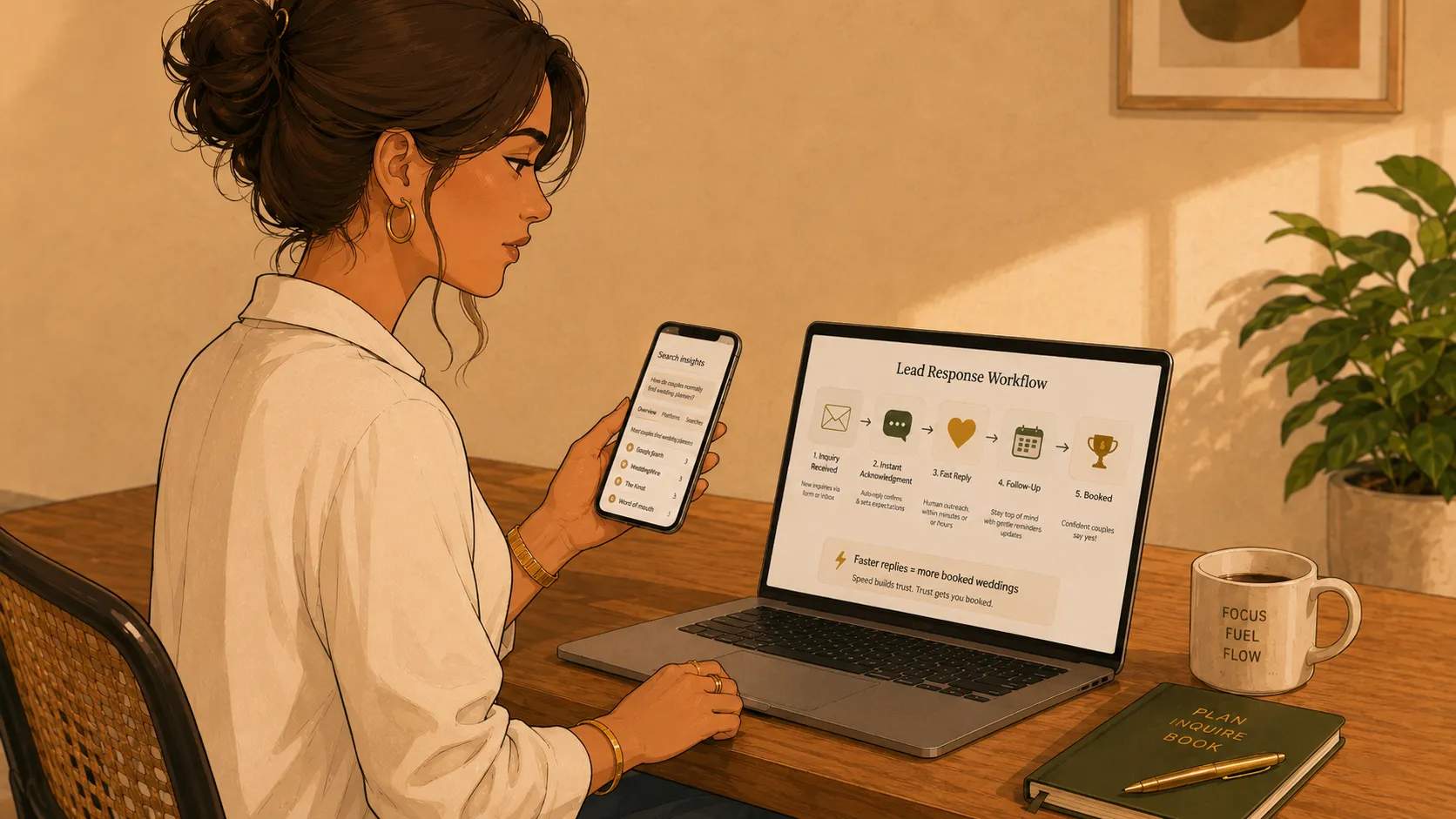
Speed does not require being available every hour. It requires automation handling the first touch while you handle the human part.
A well-configured lead response system can:
- Acknowledge every new inquiry automatically within minutes
- Confirm the details received and set expectations for a full reply
- Notify you with the inquiry details so nothing falls through the cracks
- Trigger a follow-up if the inquiry has not been addressed within a set window
- Create a CRM record that tracks where each lead stands
The goal is not for an automated message to close the booking. The goal is to make the couple feel heard immediately, give you time to write a thoughtful reply, and ensure no inquiry goes unnoticed during a busy week.
What this looks like in practice
A florist could have every new inquiry trigger an instant acknowledgment that confirms the date, thanks the couple, and lets them know they will receive a full reply within a set number of hours.
A planner could receive a CRM notification on their phone the moment an inquiry lands, with the event details summarized, so they can reply from anywhere with real context already in hand.
A venue could have a sequence that books a tour call automatically when certain availability criteria are met, removing the back-and-forth entirely.
In each case, the couple never feels like they are waiting in silence.
The bottom line
The quality of your work earns repeat business and referrals. Speed helps you earn the first conversation.
If your current process relies on catching inquiries when you happen to be at your desk, you are leaving the first response to chance. A lead response system removes that dependency and puts your business in a stronger position every time a new inquiry arrives.
That is one of the most measurable improvements available in the wedding vendor inquiry journey: speed-to-lead, reply consistency, and fewer missed follow-ups. It does not create demand by itself, but it helps you make better use of the inquiries you already earn.
If your current process depends on catching inquiries when you happen to be free, a response and follow-up audit can show you exactly where good leads are slipping. See how we improve response time →