

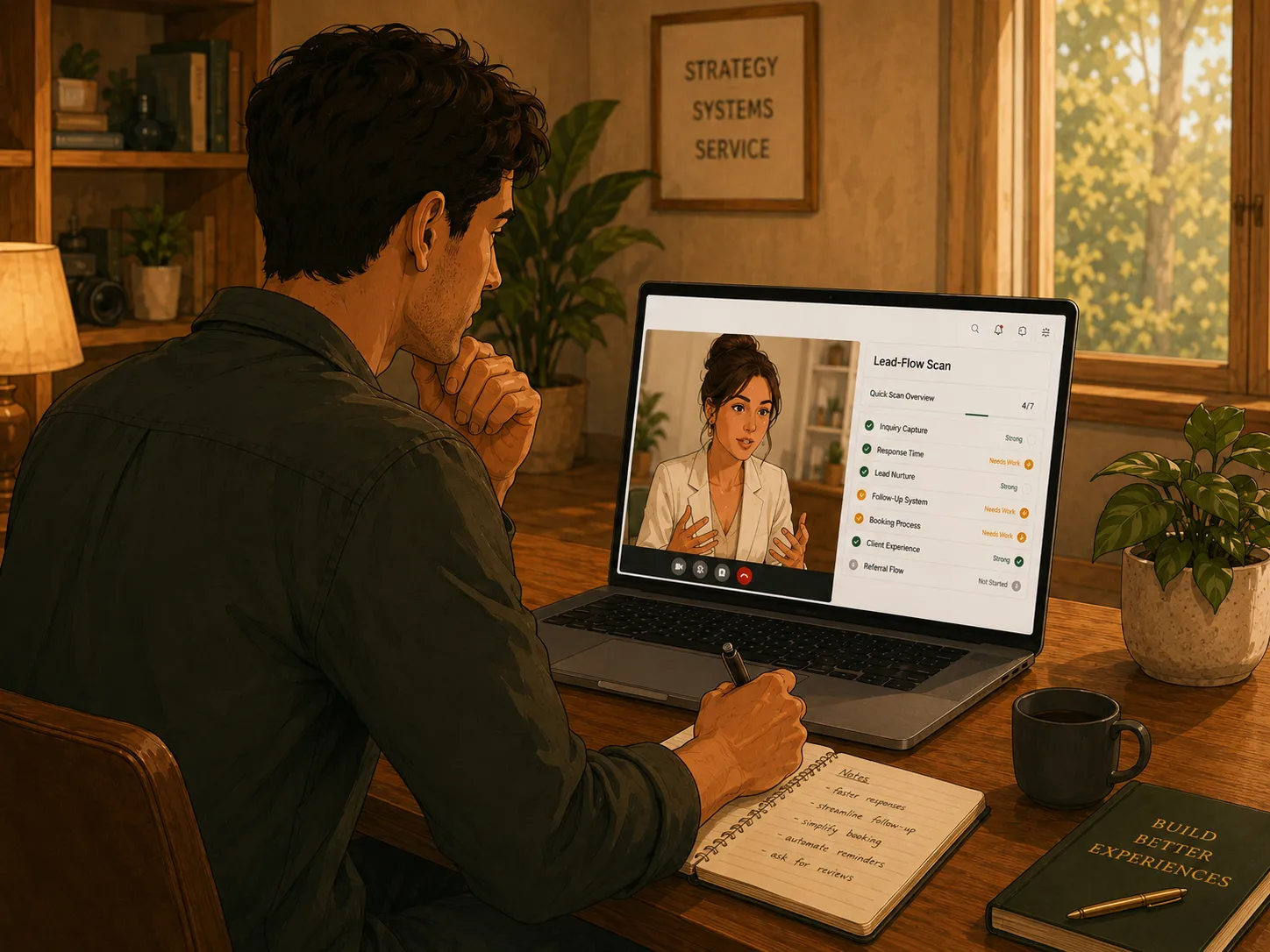
When someone reaches out to Creative Tech Stack, the first step is not a sales call. It is a structured review of where their inquiry-to-booking path is losing momentum — what we call a lead-flow scan.
This article explains what that scan covers, what the paid diagnostic audit includes if you decide to go deeper, and what the process looks like from there.
What the free scan covers
A lead-flow scan is a structured look at four parts of the client journey.
Visibility. How easy is it for the right couples to find you? We look at your website structure, Google Business Profile, marketplace presence, and whether your content is specific enough to show up in relevant searches — including AI-assisted planning tools.
Inquiry path. What happens after a couple finds you? We look at whether your inquiry form collects what you actually need, whether the next step is clear, and whether anything about the path between “I’m interested” and “I sent a message” is causing drop-off.
Response speed and follow-up. How long does a new inquiry wait before hearing from you? We look at your current process, what automation is or is not in place, and where good leads are likely slipping between the first reply and the proposal or consultation stage.
Booking flow. What happens after a verbal yes? We look at how deposits, contracts, and confirmations are handled — and whether any friction in that path is costing you dates that were otherwise close to confirmed.
The output is a plain-English summary of what we found and where we think the biggest gaps are. You leave the conversation with a clear view of what to improve, in what order, and why — whether you continue working with us or not.
What the paid diagnostic audit adds
Some businesses are ready to move into implementation after the scan. Others want a more detailed roadmap first — a specific plan for what to change, how to change it, and what the outcome should look like.
That is what the paid diagnostic audit covers ($350–$500, depending on scope).
The diagnostic goes deeper into the areas the scan identified:
- A detailed review of your website structure, SEO foundations, and inquiry path
- A CRM and response workflow audit: what tools are in place, how they are configured, and what the gaps are
- A booking flow review: contracts, deposits, payment steps, and confirmation process
- A prioritized roadmap showing what to address first, what to address later, and what measurable improvement to expect from each
You get a document you can act on. If you decide to work with us for implementation, the diagnostic becomes the plan. If you decide to take the roadmap somewhere else or work through it yourself, that is a reasonable outcome too. The audit is a deliverable, not a deposit toward future work.
What implementation looks like
If the diagnostic points to a clear set of improvements and you want to move forward, we scope the build based on what the audit found.
That could mean a website, a CRM and lead response setup, a booking flow, an AI-supported workflow, or a connected combination of several of those. The scope is based on the actual gaps — not a preset package.
Ongoing support, if you want it, is available as a monthly retainer starting at $250/month. That keeps the systems sharp through busy seasons, platform changes, and business growth.
Why we start with the scan
Most vendors reach out because something is not working. They are getting inquiries but not converting them. They feel like they are slow to respond but are not sure how to fix it. They have invested in a website and are not seeing the inquiry volume they expected.
Starting with a scan means the first conversation is diagnostic, not generic. We are looking at your specific situation — not running through a standard pitch.
That usually makes the conversation shorter and more useful. And whatever comes next is shaped around the actual problem, not a best guess.
The bottom line
The free scan is the fastest way to get a clear picture of where your inquiry-to-booking path is losing momentum. It does not cost anything. It takes about 30 to 45 minutes. And you leave with a specific, prioritized view of what to work on.
The diagnostic audit goes deeper if you want a full roadmap before any build begins. Either way, the goal is the same: a clear understanding of what to fix, so the work that follows is pointed at the right problems.