
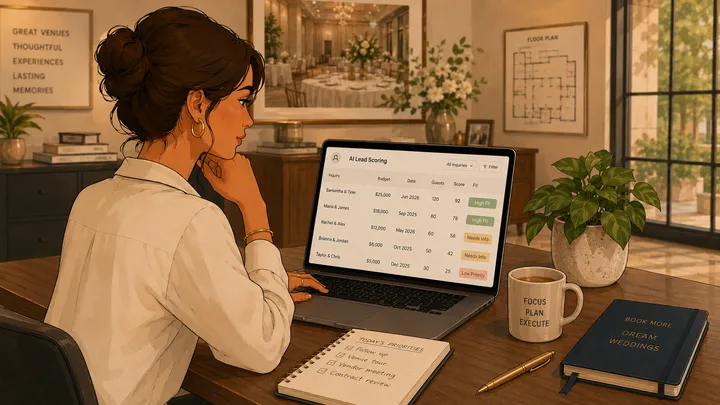
Not every inquiry deserves the same amount of time.
That can feel uncomfortable to say, but every wedding and event vendor knows it is true. Some inquiries are a great fit. Some need more information. Some are outside your budget, location, availability, or service style.
The problem is that they all land in the same inbox looking equally urgent.
The problem
Most vendors treat every inquiry the same because they do not have a clear way to sort them.
That means a high-value, ready-to-book client may wait while you spend time responding to someone who is not a fit. It also means you may waste energy chasing leads with unrealistic budgets, unclear dates, or needs that do not match your services.
This is not a sales problem. It is an organization problem.
When your pipeline is busy, you need a better way to see which leads need attention first.
How AI can help
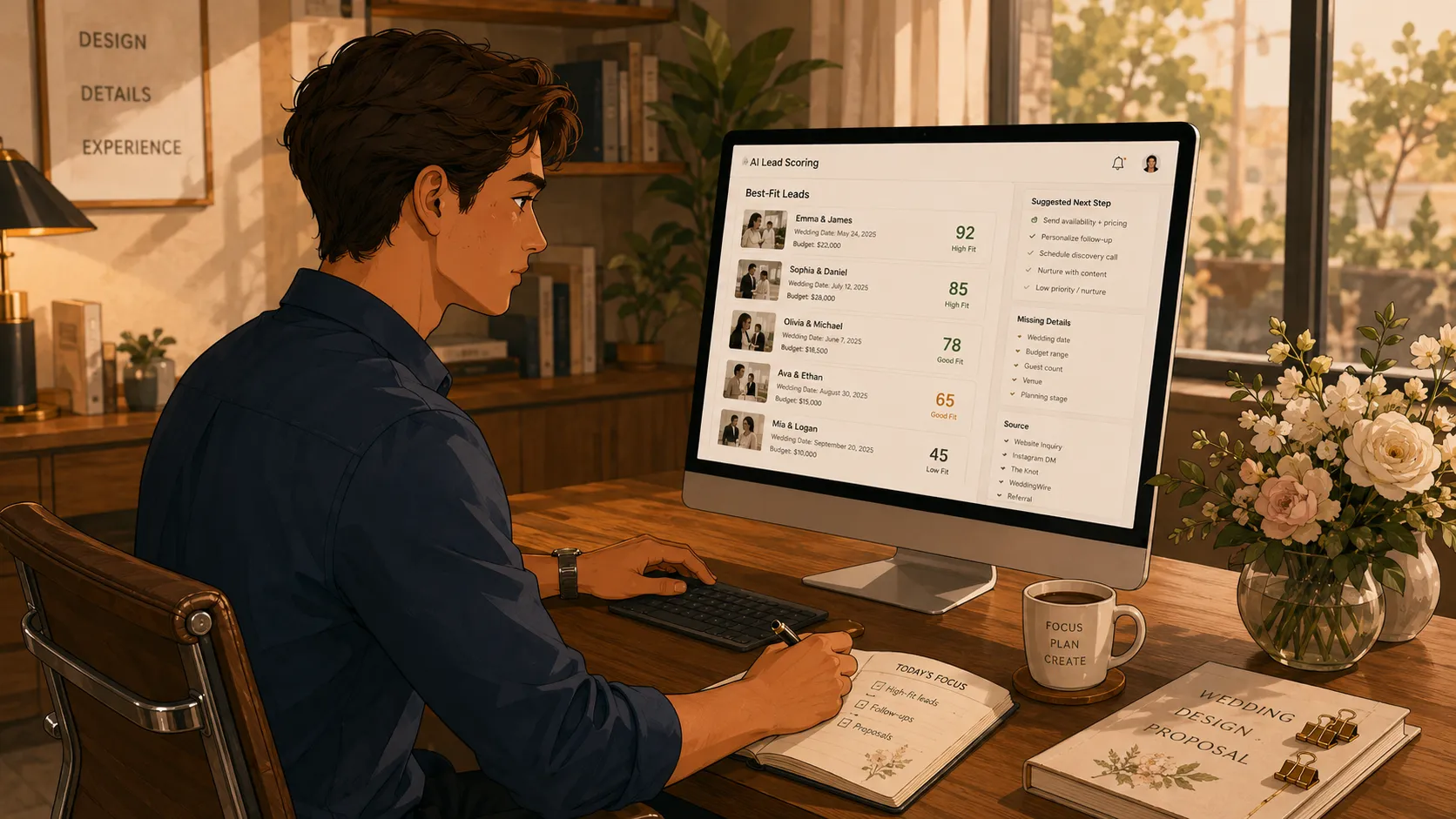
AI lead scoring can review inquiry details and help you understand which leads are most likely to be a strong fit.
The score can be based on the factors that actually matter to your business, such as budget, date, location, event type, guest count, service needs, timing, and availability.
AI can help:
- Review new inquiries and assign a lead quality score
- Flag high-priority leads that need a fast response
- Identify missing details before you spend time writing a full reply
- Recommend the next best step, such as send pricing, ask a question, or book a call
- Show which marketing channels are bringing in the strongest inquiries
This does not replace your judgment. It gives you a clearer starting point.
Why it matters
Good leads should not get buried.
When vendors are busy, the best inquiries often need the most thoughtful response. AI lead scoring helps you focus your energy where fit, urgency, and missing details are clearest.
It can also help you notice patterns over time. Maybe certain venues bring better leads. Maybe one service page attracts higher-budget clients. Maybe Instagram brings a lot of messages, but Google brings more serious inquiries.
That information helps you make better decisions.
What this looks like in practice
A planner could quickly see which inquiries match their full-service planning package instead of spending time on events that only need day-of help.
A venue could prioritize leads with realistic guest counts, flexible dates, and clear booking intent.
A florist could identify inquiries that match their minimum spend, design style, service area, and availability.
Every vendor defines a good fit differently. That is why the system should be built around the business, not a generic scoring model.
The bottom line
Lead scoring helps vendors stop guessing.
When you can see which inquiries are urgent, high-fit, or missing key details, you can respond with more confidence and spend less time chasing the wrong opportunities.
That means better follow-up, better use of time, and a healthier path from inquiry to clear next step. It will not create demand by itself, but it can improve a measurable part of the client journey: inquiry quality.
If your pipeline makes it hard to tell which leads need attention first, we can set up scoring and prioritization inside your existing workflow. See how we build AI-supported inquiry workflows →