
Clients want to feel taken care of. They want to know what is happening, what comes next, where to find things, and what still needs to be done.
But many wedding and event vendors are still managing that experience through scattered emails, PDFs, Google Docs, Dropbox links, Canva boards, payment links, and text messages.
It is not that vendors are disorganized. It is that the information lives in too many places.
The problem
When clients cannot easily find what they need, they ask again. When vendors have to answer the same questions repeatedly, the process starts to feel heavier than it should.
A missing timeline, unsigned contract, unpaid invoice, or buried questionnaire can create stress for everyone.
This matters because client experience is not only about the final event. It is also about how easy and confident the client feels along the way.
How AI can help
AI can help create and organize the content that belongs inside a client portal.
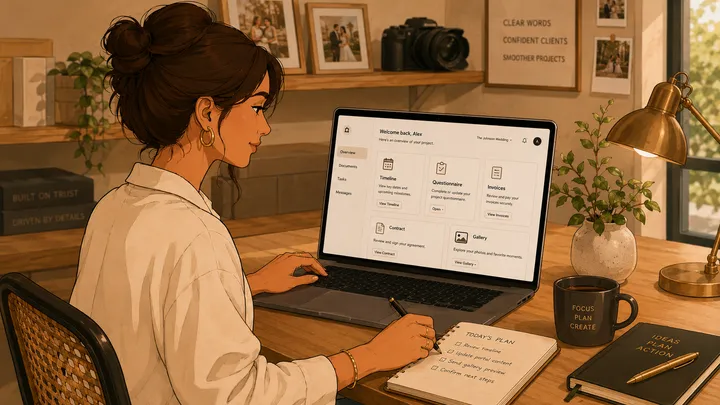
A good portal gives each client one central place for the important parts of the project: documents, dates, next steps, payments, timelines, files, notes, and helpful reminders.
AI can help:
- Create client-friendly summaries from emails, forms, and planning notes
- Generate timelines, checklists, FAQs, and next steps for each event
- Surface missing items like unsigned contracts, unpaid invoices, or incomplete questionnaires
- Draft portal updates when something changes
- Answer simple client questions using approved business information
The result is not just a portal with files in it. It is a clearer, more guided client experience.

Why it matters
A strong client portal makes your business feel more professional.
It reduces confusion, cuts down on repetitive messages, and helps clients feel like they are in good hands. It also gives vendors a better way to manage details without searching across multiple tools.
For wedding and event businesses, this can be a real differentiator. Clients may not know exactly what systems you use, but they can feel when the process is smooth.
What this looks like in practice
A florist could use portal content for mood boards, color palettes, proposal updates, invoice links, delivery notes, and final design reminders.
A photographer could organize shot lists, session prep guides, contracts, payment status, and gallery delivery information.
A planner could give clients a central place for timelines, tasks, vendor contacts, budget notes, and planning documents.
The goal is simple: one place, fewer questions, better experience.
The bottom line
A client portal should do more than store links.
With AI-supported content, it can help guide the client, keep details organized, and reduce the amount of manual communication vendors have to manage after the booking.
That means fewer scattered messages, clearer next steps, and a client experience that supports what you promised during the sales process. It will not create demand by itself, but it can reduce post-booking confusion and protect the client experience after the yes.
If your booked-client experience still runs on scattered emails and shared links, a connected client portal can reduce the back-and-forth considerably. See how we build AI-supported client portals →